Start a Trapping Group
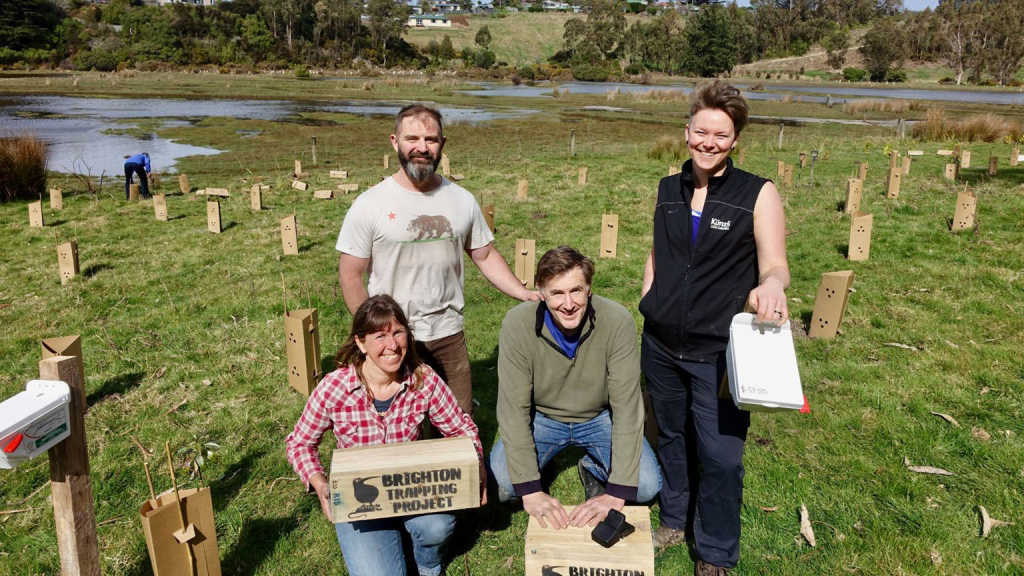
Trapping pests benefits our communities in many ways—protecting native species, saving our fruit trees, or building stronger and more resilient communities.
Starting a group is a big step up from backyard trapping. It takes commitment, a clear plan, and the ability to rally others (and funders) around your cause. Before you begin, check if there’s an existing group nearby that could use your energy — every group needs more hands!
We’ve gathered key things to think about before you start, plus local Canterbury resources to guide your journey.
Good luck — your effort makes a real difference!
Top 10 Tips
- Define your “Why.”
Keep asking why until you get to the deeper reason behind your project. For example, WHY do you want to get rid of the pests? The answer might be” We care about nature and want to see it flourish”. A strong “why” motivates your team and attracts funders. (Check out Simon Sinek’s classic TED Talk for inspiration.) - Write a plan.
Keep it short (ideally 2 pages). Cover:- Why you’re doing this
- What you’ll do
- How you’ll achieve it
- Decide where to trap.
Backyards? Local reserves? If you’re targeting Christchurch City or Banks Peninsula public areas, CCC approval is needed as trapping is not allowed in all reserves. - Build a team.
Funders prefer groups over individuals, simply because the chance of long term success is higher. Recruit people for roles like trap builders, volunteer coordinators, admin, social media, and sponsorship/funding application writers. Oh, and trappers! - Plan your funding.
A clear “why” and solid plan make funding more likely. Think creatively about where the money or resources could come from, rather than relying only on contestable funds. Be realistic initially. Options include:- Predator Free NZ backyard trapping fund ($1,000 – $5,000)
- Local councils and Environment Canterbury
- Selling traps, securing sponsorships, or cash or in-kind donations
- Health & Safety.
Most funders will require a health and safety plan. It protects your volunteers and community. (A template will be available soon.) - Legal entity?
Not essential for starting a group, and registration can be costly and time-consuming. But since many funders require one, consider partnering with a local residents’ association or another registered group to hold funds. - Monitor pests.
Monitoring shows what pests you have, in what numbers, and tracks impact. It’s required for reserves and important to funders. Arguably as important is monitoring biodiversity outcomes (e.g., bird counts before and after). Our goal after all might be more birds. - Choose targets and traps.
Common targets are rats, possums, mustelids (stoats, weasels, ferrets). Each needs a different approach. Define your targets, learn about them, and select traps accordingly. Start small, refine processes, then expand. - Record your catches.
Recording is vital and Trap.nz is a great tool. Tracking progress motivates volunteers and proves results to funders.
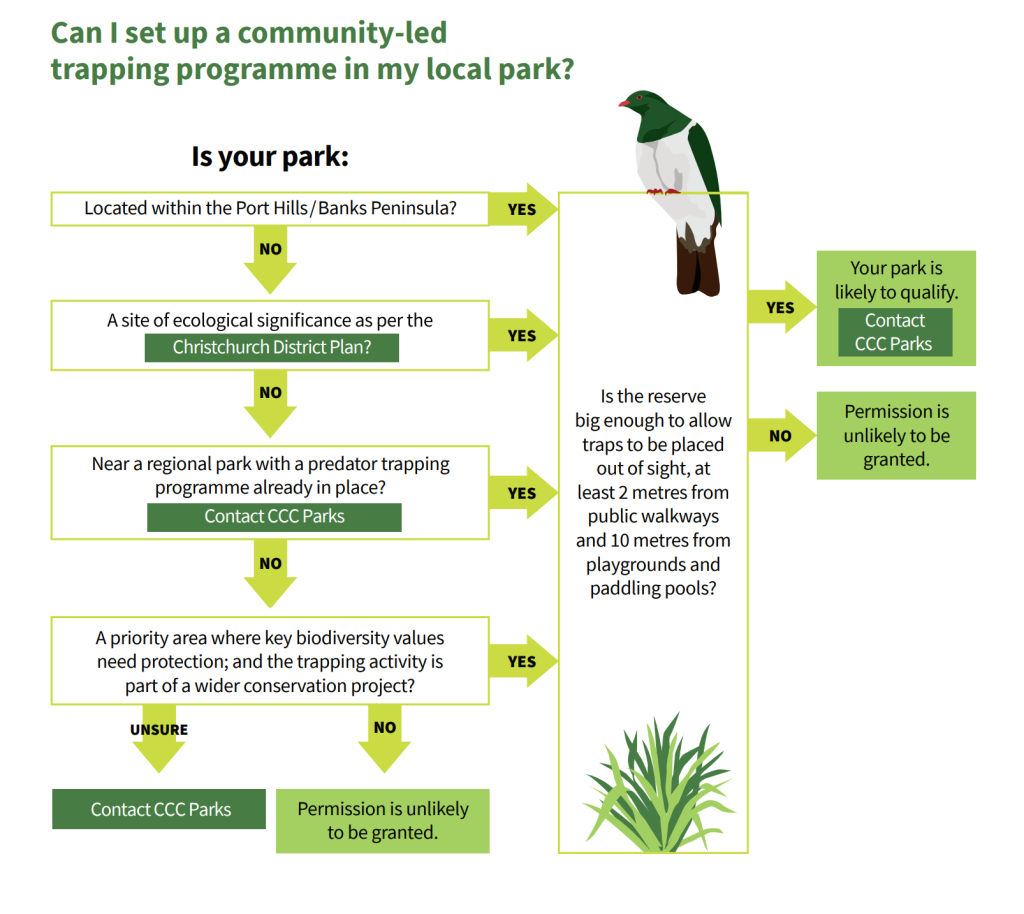
Before we get to the resources, here’s the CCC flow chart for trapping in public spaces. Note it’s very focused on biodiversity, so even if you know pests are present you may not necessarily gain permission to trap.
Resources:
Starting a Trapping Group
- Christchurch City Council
If you’re trapping on public land or reserves managed by CCC you need their permission. More information and links can be found on this page on the CCC website, but in particular you’ll NEED to read this document which specifically outlines requirements for trapping in parks. - Predator Free NZ Trust.
PFNZ work with backyard trapping groups all around NZ and have developed a great set of resources on a range of topics. Pretty much all you need to know is covered in their “Starting a Group” toolkit. - Also by PFNZ, Engaging and Motivating Volunteers
This is an excellent 2 pager on engaging volunteers, great reading for all trapping groups. Downloadable PDF, click here. - Predator Free Miramar
An essential guide for community groups, ‘How to kill rats and engage a community’, developed by Dan Henry, is for anyone interested in starting up their own community trapping group. - Department of Conservation
If you’re looking to trap on public conservation land (PCL) DOC has a 7 step guide. Downloadable PDF, click here.
Trapping Guides
- Department of Conservation.
DOCs Practical Guide to Trapping is really THE definitive guide to trapping in NZ. Everything from descriptions of pests to building traps, this is your pest bible. But there’s a lot of of information, so if it’s a bit overwhelming you can turn to … - Predator Free NZ Trust
The hands-on guide to predator control, made for community groups and projects. These are new guides and are far more simple than the DOC guides. Ideal for members of your group to learn about the species you are trapping and best practices. Also consider signing up for “The Basics” a series of three Predator Free New Zealand Trust emails to help you get started in predator control.
Budgeting and Funding
Money is a big part of starting or running a group, and one of the hardest things to wrangle! Check out our funding page a good template for generating a budget, and some ideas for where to start your journey for funding. Good luck!
Hopefully by now you are not too overwhelmed! There is a lot to take in and there are many decisions you’ll need to make. And for some, or even many of those, you may not feel you know the answer. You’re welcome to fire questions our way, or join our Facebook group and ask our fabulous community!